I was a decoupler before decoupling was cool. I have advocated selective decoupling of the US economy from China for the past four years, arguing that the United States requires absolute self-sufficiency in strategic areas such as defense electronics. That, Dr Henry Kressel and I argued in a November 2016 Wall Street Journal op-ed, requires a massive national effort to bring computer chip fabrication back onshore. We wrote: “Washington should also enforce strict US content rules for sensitive defense technology. Many of the Pentagon’s military systems depend on imported components. That’s a concern on security grounds alone. Procurement rules should be changed to require that critical components be manufactured in the US.”
The suddenly popular idea of total decoupling of the American and Chinese economies, however, is not a policy, but a tantrum.
Self-sufficiency in strategic goods is expensive, but national security is like JP Morgan’s yacht: If you have to ask how much it costs, you can’t afford it. Self-sufficiency in all manufacturing is a different matter; imports from China now amount to roughly a quarter of total US manufacturing output, and the cost of domestic substitutes would be far greater than that, because the US doesn’t have the skills to replace a great deal of Chinese production.
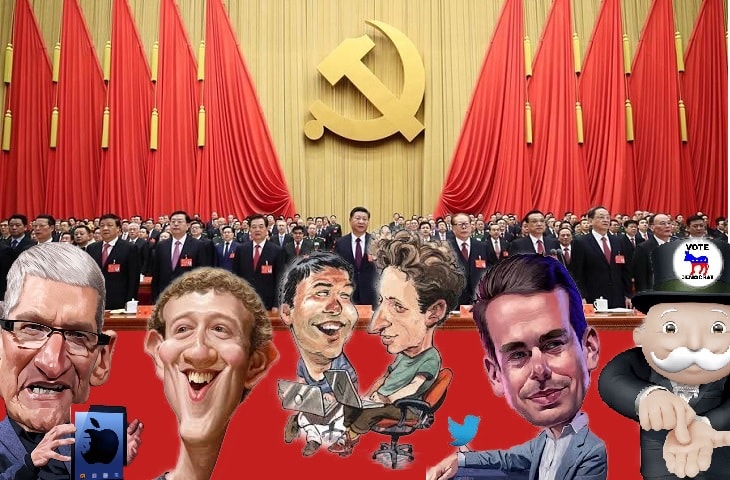
China shipped $70 billion of smartphones to the US in 2018 and $45 billion worth of computers. Here is Apple CEO Tim Cook on why Apple makes I-phones in China: “China has moved into very advanced manufacturing, so you find in China the intersection of craftsman kind of skill, and sophisticated robotics and the computer science world. That intersection, which is very rare to find anywhere, that kind of skill, is very important to our business because of the precision and quality level that we like.
“The thing that most people focus on if they’re a foreigner coming to China is the size of the market, and obviously it’s the biggest market in the world in so many areas. But for us, the number one attraction is the quality of the people… It’s not designed and sent over, that sounds like there’s no interaction. The truth is, the process engineering and process development associated with our products require innovation in and of itself. Not only the product but the way that it’s made, because we want to make things in the scale of hundreds of millions, and we want the quality level of zero defects.” - Full Story - DAVID P. GOLDMAN - Asia Times
Big Tech’s Toadying to Chinese Communists Demands Action
For years, tech companies like Apple have outsourced their manufacturing to China—and, increasingly, bent the knee to Chinese demands. Apple, in particular, has a troubling pattern of acquiescing to China’s commands on things like privacy and data storage. Even Apple’s encryption keys—which unlock the data of millions of users—are stored in China.