How traveling back in time
is permitted by Einstein’s physicsTraveling back in time is a staple of science fiction movies. But according to Einstein, it’s a physical possibility that’s truly allowed.
... Read More
Chernobrov Time Machine
Vadim Alexandrovich Chernobrov passed away in 2017. He was the head of a group known as the Kosmopoisk [Spacesearch] aka "All-Russian Research Public Organization". He was a UFO and pseudoscience enthusiast. One of his projects involved research in altering the flow of time, an endeavor he was involved in for the last 20 years of his life [Since 1987]. In 2001 Chernobrov claimed to have built a working time machine. ... Read More
Ancient Knowledge of Space Time
Many Centuries before Newton or Einstein popped into existence, the Ancient Indians, the forebears of the Hindu and Buddhist religions had an understanding of the 4th dimension that is unexplained by conventional theories of history. They believed that the duration of time was not a constant and changed from world to world and age to age, they knew it was not an absolute value. ... Read More
By Santa Fe Institute
What if your entire past never actually happened?
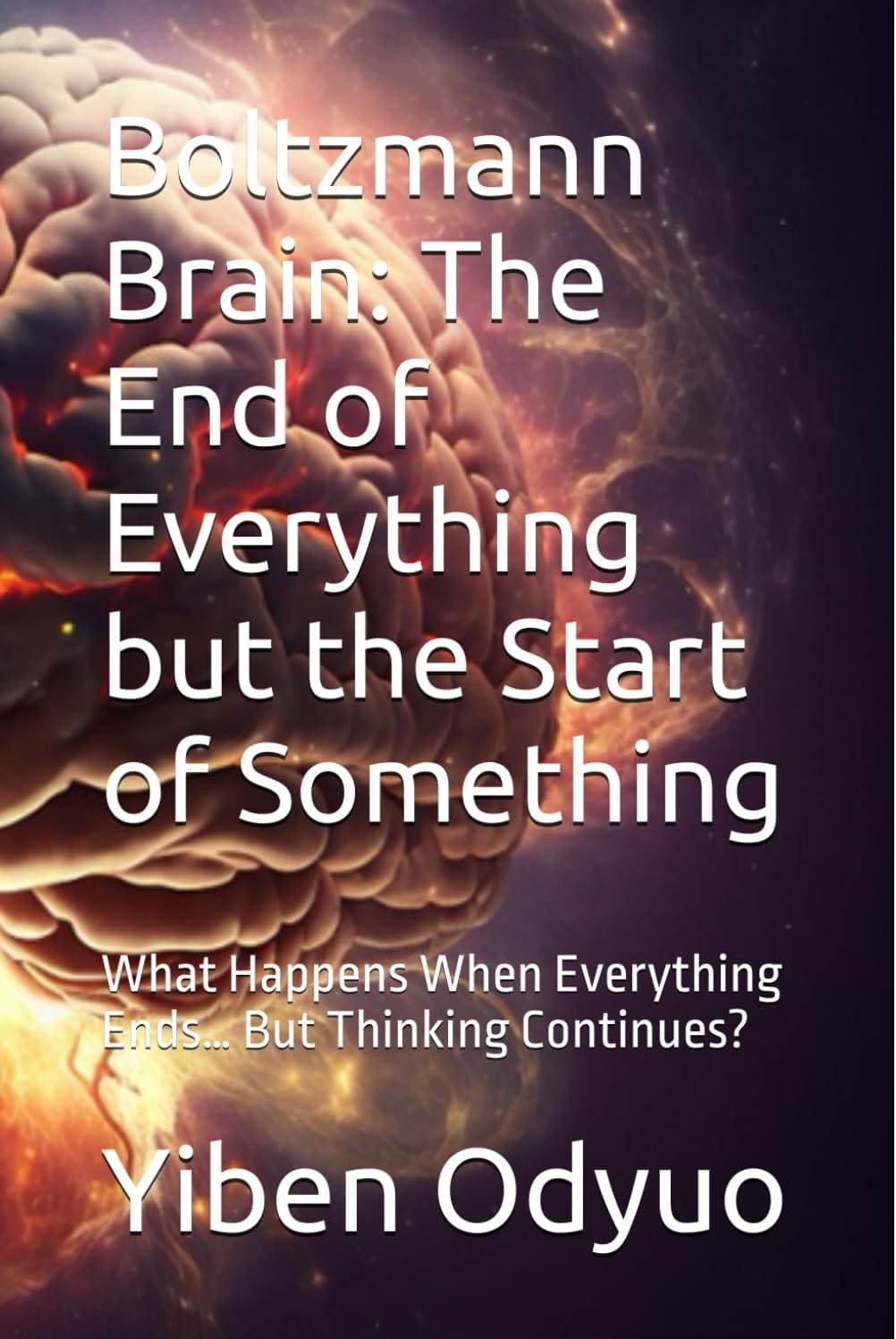
That unsettling idea is at the center of a new study by SFI Professor David Wolpert, SFI Fractal Faculty member Carlo Rovelli, and physicist Jordan Scharnhorst. They revisit the “Boltzmann brain” hypothesis, a thought experiment that has challenged physicists for over a century. Named after 19th century physicist Ludwig Boltzmann, the idea comes from his work on entropy, a measure of disorder that tends to increase over time according to the second law of thermodynamics.
In a universe that exists for an extremely long time, random fluctuations in entropy could occasionally produce highly organized structures. In principle, that could include something as complex as a functioning brain complete with detailed memories and perceptions. If that is the case, then what we experience as a coherent past might not be real. It could instead be a brief, random event that only appears meaningful.
The issue stems from a deeper conflict within statistical physics. A key principle used to explain why time appears to move in one direction is Boltzmann’s H theorem, which plays a central role in statistical mechanics. At the same time, the theorem itself is symmetric with respect to time.
Because of this symmetry, it is, in a strict mathematical sense, more probable for complex structures such as memories and observations to arise randomly from fluctuations in entropy than to serve as accurate records of a real past. This leads to a troubling implication that our experiences could be misleading, formed by chance rather than grounded in actual events. This is the core of the Boltzmann brain hypothesis.
Assumptions shape how time is interpreted
Full Article @ SciTech Daily
Boltzmann Brain - Wikipedia
Boltzmann Brain and Why Is It a Paradox?
- Science Insights
What Did Einstein Mean By "Time Is an Illusion"? - Interesting Engineering